Apr 22, 2026
Traditional vs Virtual Staging (2026): Costs, Buyer Psychology & MLS Disclosure

If you only read one sentence: traditional staging optimizes the in-person walkthrough; virtual staging optimizes the online funnel—and the best teams often use both, not because they are confused, but because clicks and showings are two different conversion paths.
This guide is for agents, photographers, and sellers who already know that virtual staging exists, but need a decision framework: budgets, disclosure, buyer psychology, and where AI changes the math. If your immediate job is picking software, start with our best virtual staging software (2026) roundup; come back here for economics and compliance context. For vendor-by-vendor specs, Collov also publishes Choosing AI virtual staging for real estate (2026 comparison).
Key takeaways
Cost structure differs more than price tags: physical staging often behaves like rent + labor + logistics; virtual staging behaves like software credits + human retouching (optional).
Buyer attention splits: thumbnails and portal scroll reward digitally staged hero shots; some buyers still need physical cues once they stand in the room.
MLS and advertising ethics require clear labeling of virtually staged images; local rules win over generic blog advice—use the checklist below as a starting point, then confirm with your MLS and broker counsel.
AI virtual staging collapses iteration time: you can treat staging as versioning (style A/B, seasonal refresh) rather than a one-off deliverable—see Collov AI when you are ready to operationalize.
Hybrid playbooks outperform absolutism: virtual-first marketing + partial physical (key rooms only) is common in luxury and in slow markets.
What typical articles already say—and what this guide adds
Most ranking pages repeat the same consensus: virtual staging is cheaper and faster, traditional staging helps buyers feel the space. That is directionally true but operationally thin.
Relative to that consensus layer, this article deliberately adds information gain (see our editorial standard aligned with Information Gain and internal guidelines):
A disclosure-first checklist you can hand to marketing staff—not a vague “check MLS rules” sentence.
A hybrid decision tree for when “virtual only” is the wrong call (luxury, odd floor plans, investor-heavy tours).
Cost bands with explicit methodology so you know what is being compared (monthly furniture rental vs per-image credits).
A listing-week workflow that separates capture, post, and compliance responsibilities—reducing the classic failure mode: beautiful pixels that cannot be published legally.
If a section does not help you decide or execute, it does not belong here.
Definitions: three things people confuse
Traditional (physical) staging places real inventory—sofas, beds, art—in the property for showings and photography. Buyers interact with real objects; photography is downstream of that setup.
Virtual staging (digital) composites furnishings into photos of empty or dated rooms. The property itself may remain empty; the image is what changes.
AI virtual staging is a subset of virtual staging where a model proposes furniture, perspective alignment, and style variants in seconds to minutes, often inside a product like Collov AI. Human virtual staging still exists (designers composite by hand); AI shifts iteration cost toward near-zero.
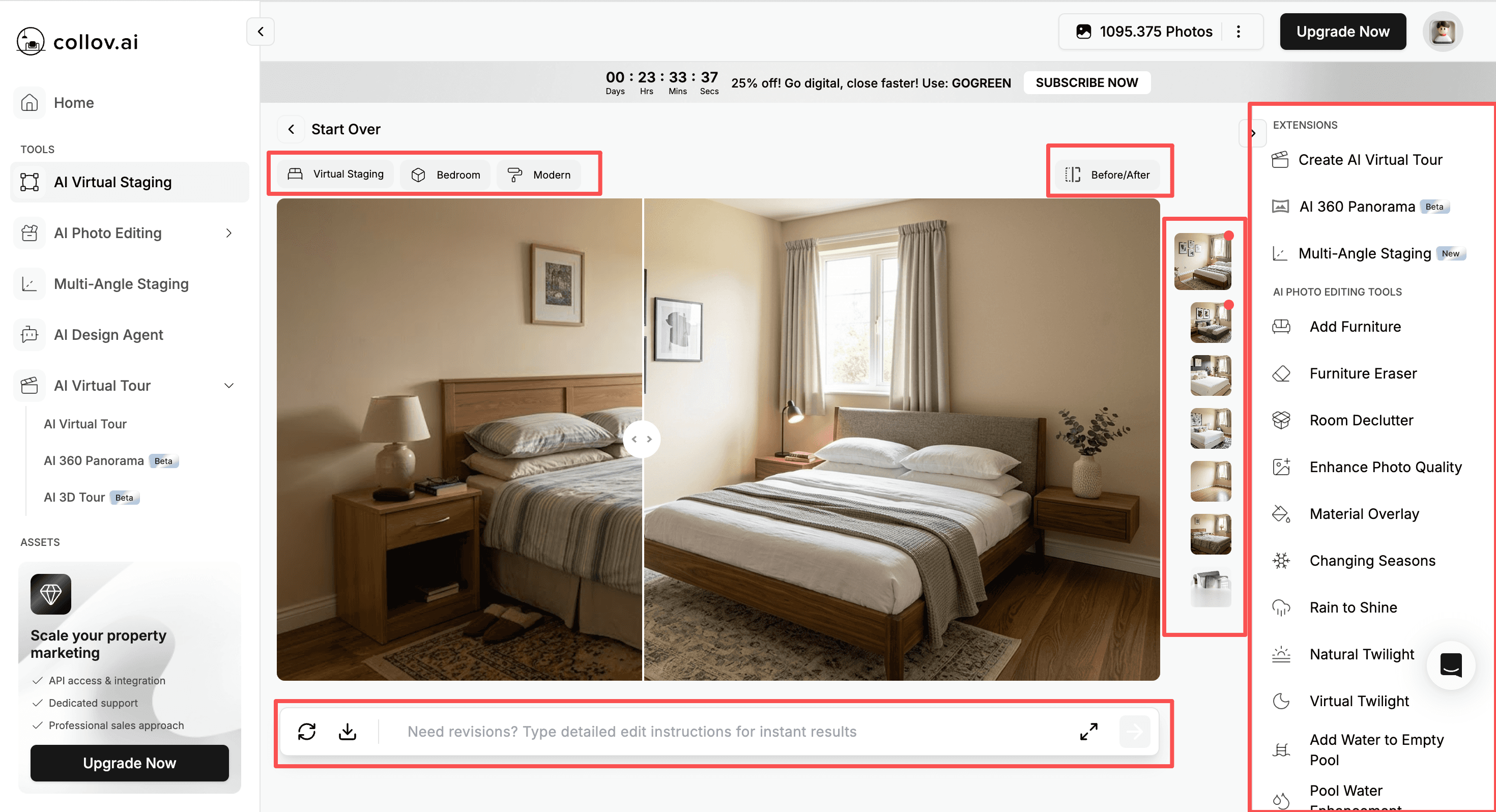
Cost reality: ballpark bands and how to read them
Prices vary by city, vendor, and service tier. Use the table as planning bands, not quotes.
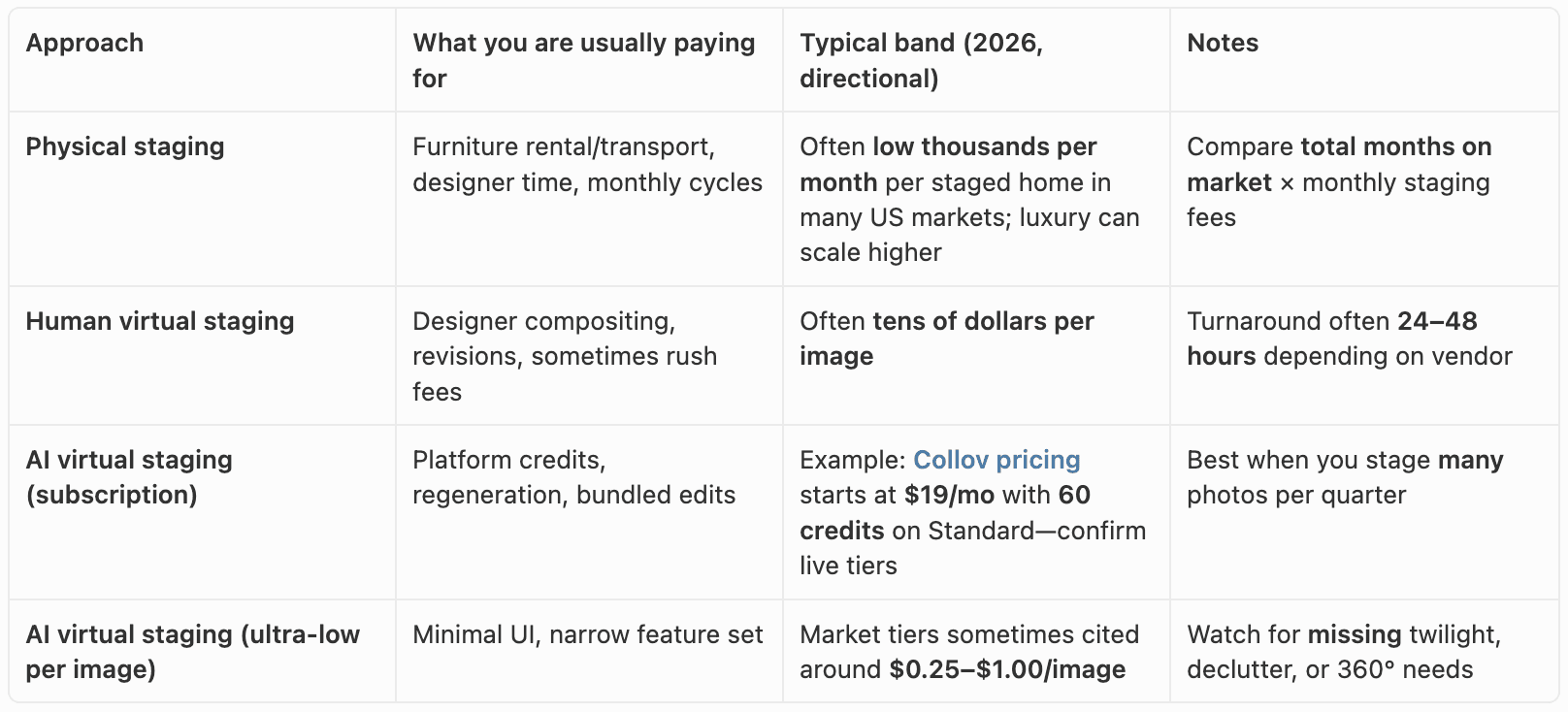
Methodology note: compare cost per published marketing set (hero + supporting rooms), not cost per single thumbnail. A listing with eight staged views changes the math quickly.
Industry research on staging and home sales is published periodically by organizations such as the National Association of Realtors—use their latest reports for market-level claims, not as a promise for any one listing.
Buyer psychology: where each staging type wins
Online discovery (the scroll)
Portal feeds reward clarity of function: dining vs office vs primary bedroom story. Vacant rooms often fail the first-glance test because buyers cannot infer scale from a wide-angle box.
Virtual staging—especially fast AI iteration—helps teams test hero angles: modern vs coastal, warmer vs cooler tones, without moving physical inventory.
In-person showings (the walk)
Some buyers mentally map furniture well; others struggle with empty volume. Physical staging removes abstraction: they feel ceiling height, walkway width, and light bounce in a way that pixels cannot fully replace.
Information gain / anti-consensus: “Always virtual” is wrong for some luxury listings where in-person emotion drives offers, and for investor-heavy segments where buyers care more about spreadsheets than sofas—but still need online polish. The winning move is often virtual for marketing + physical for hero showings on select listings.
MLS, portals, and advertising: a practical disclosure checklist
Rules vary by MLS, state, and brokerage. Treat this as an internal QA list—not legal advice.
Identify virtually staged images the way your MLS requires (caption, watermark policy, field flags—whatever your association publishes).
Keep an unaltered or empty-room reference available when the MLS asks for “true condition” documentation.
Do not imply in-person furnishings exist if they do not; avoid language like “fully furnished home” when only the photo is furnished.
Disclose material edits beyond furniture—green grass, twilight, removed clutter—per local photo ethics norms; when unsure, ask compliance.
Match portal rules (Zillow, Realtor.com, etc.) in addition to MLS; export specs differ.
Train showing agents with a one-liner: “Marketing photos are virtually staged to show layout ideas; the home is delivered vacant.”
If you publish at scale, store versioned files (RAW, EDITED_UNSTAGED, STAGED_VIRTUAL) so you can answer questions without panic-searching a hard drive on deadline.
Decision tree: which staging mix should you default to?
Is the home vacant and online traffic the bottleneck?
→ Default virtual staging; consider Collov AI for speed and multi-angle consistency.
Is the listing luxury or emotionally driven, with showings that make or break offers?
→ Strongly consider physical staging for at least key rooms, or a hybrid.
Do you need seasonal re-marketing (winter → spring) without a reshoot?
→ AI photo tools (season, twilight, cleanup) pair well with virtual staging—Collov bundles many of these in higher tiers; verify on pricing.
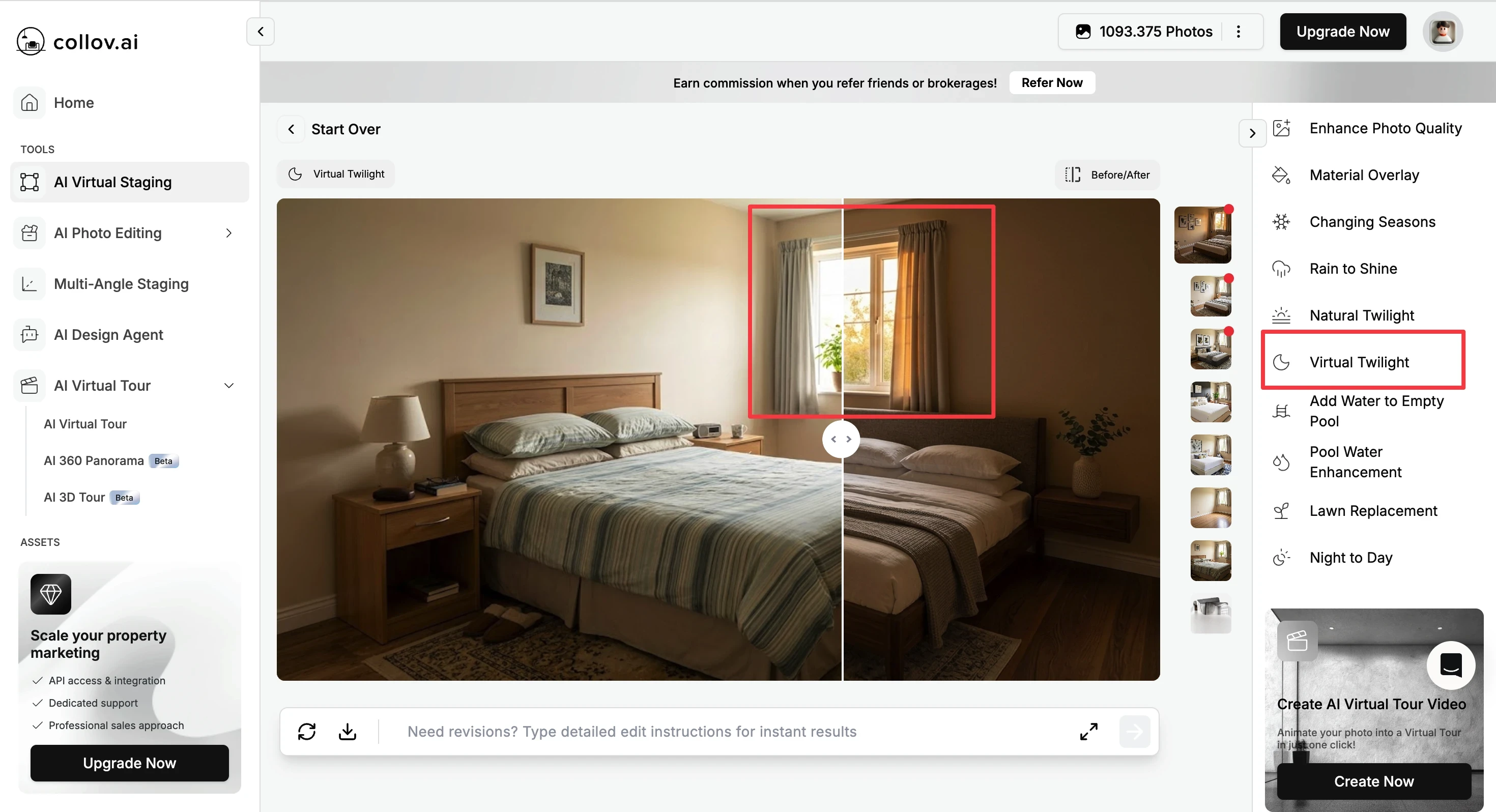
Are you time-constrained (listing goes live Friday)?
→ AI-first beats waiting on furniture delivery—then schedule physical later if needed.
Is the floor plan confusing?
→ Add floor plan + labeled virtually staged stills; sometimes physical staging is still the honest fix for walkthrough confusion.
Hybrid playbook (what high-performing teams actually do)
Phase A — Launch: Virtually stage hero + secondary rooms for MLS and social. Publish with proper disclosure.
Phase B — Traffic feedback: If clicks are strong but showings are weak, ask whether price, access, or in-person emptiness is the issue—not only the photos.
Phase C — Selective physical: Add physical pieces only where spatial doubt shows up in buyer questions (“Will a king bed fit?”).
Phase D — Refresh without reshoot: Swap marketing variants (season, twilight) using AI tools when inventory sits—cheaper than a second staging contract.
For agent-centric workflows, Collov’s real estate agent hub summarizes outcomes teams care about (speed to listing-ready creatives); designers may prefer the designer hub for client presentations.
Photography notes: capture for virtual staging success
Virtual staging is not magic for bad inputs.
Expose for the room, not the window blowout—HDR or bracket when needed.
Keep verticals reasonable; extreme wide angles make furniture scale look fake faster.
Capture floor area; staging needs pixels to “ground” pieces.
Shoot emptier when possible; heavy existing clutter increases edit time.
If you are also delivering twilight or sky swaps, shoot separate exposures intentionally—your post vendor (or change seasons / twilight tools) will thank you.
A one-page “listing week” workflow (roles optional)
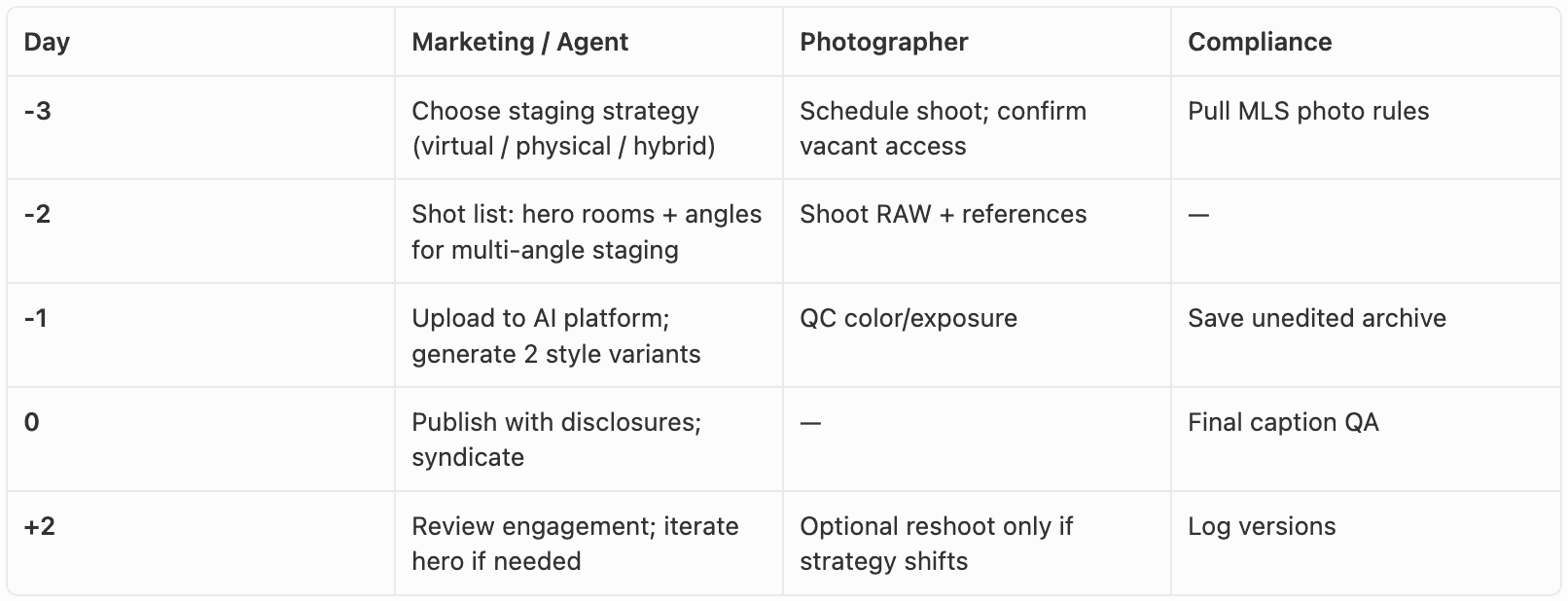
This is process information most generic explainers skip—it is also where teams capture margin: fewer emergency redesigns, fewer MLS rejections.
Where AI changes the business model
Before AI, virtual staging behaved like creative services: brief, wait, revise, invoice. After AI, the same function behaves like software operations: credits, templates, regeneration, and multi-angle consistency across a listing set.
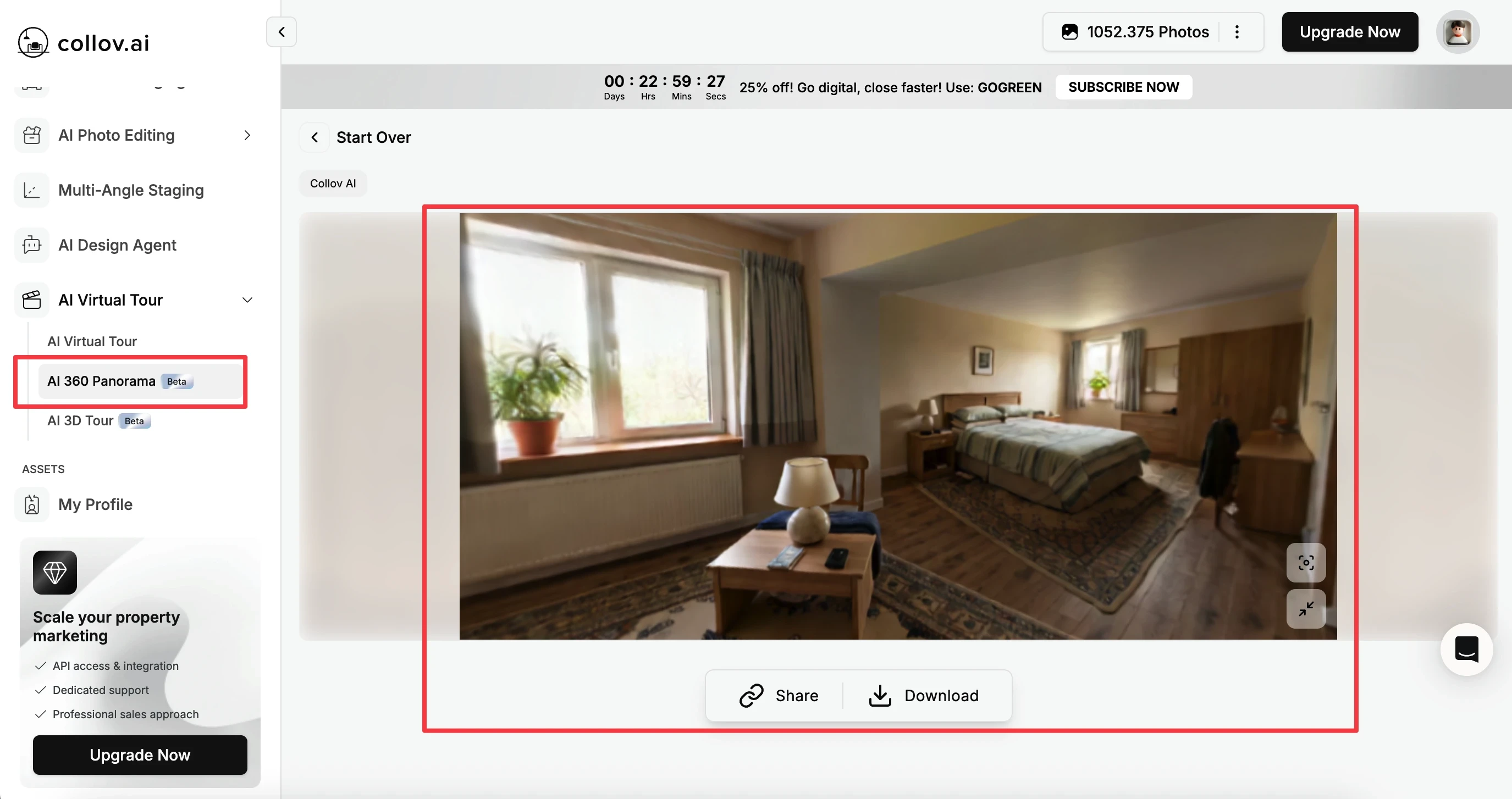
Collov positions generation around ~15 seconds with multi-angle staging, plus a broader toolkit (declutter, enhancement, 360° / virtual tour class outputs on premium tiers). Outcome stats Collov publishes—such as up to 73% faster sales, up to 78% more buyer interest, and up to 20% higher offers—are directional marketing claims, not guarantees for your ZIP code; validate what your brokerage allows you to cite in ads.
If you are choosing between vendors after you understand traditional vs virtual, return to best virtual staging software (2026).
Conclusion
Traditional staging still earns its keep when in-person emotion and spatial confidence are the constraint. Virtual staging wins when speed, cost at scale, and digital iteration matter—and AI makes iteration cheap enough to treat marketing photos like a product, not a one-off deliverable.
Start with the funnel: fix the scroll first without breaking MLS trust. Then invest in physical where showings prove the need.
Next steps: explore Collov AI virtual staging, compare tiers on pricing, and read Choosing AI virtual staging for real estate (2026 comparison) when you are ready to shortlist vendors.
FAQ
Is virtual staging “lying” to buyers?
It is marketing visualization—ethical when disclosed and when the underlying property condition is represented accurately. Problems start when photos imply on-site furnishings or hide material defects.
Is virtual staging cheaper than traditional staging?
Usually yes for the marketing photo set, especially at volume. Physical staging can still be cheaper per showing hour if you measure only one open house—but that ignores inventory months and logistics.
Can I use virtual staging instead of cleaning a messy house?
You can remove clutter in post up to a point, but severe condition issues should be fixed in real life. Over-editing condition crosses into misrepresentation risk in many markets.
Does virtual staging help empty homes sell?
It often helps online engagement, which feeds showings—but price, location, and access still dominate. Treat staging as amplification, not a substitute for strategy.
What is the fastest path for agents?
AI virtual staging plus a disciplined capture checklist; use Collov AI when you want seconds-class turnaround and multi-room consistency.
Where do I learn about specific MLS rules?
Start with your MLS documentation and broker compliance team. National context may reference association guidance; your local association interpretation is what matters in production.
Last updated: April 2026. MLS rules, portal policies, and pricing change frequently; confirm details with your brokerage and each vendor’s official website.