Mar 12, 2026
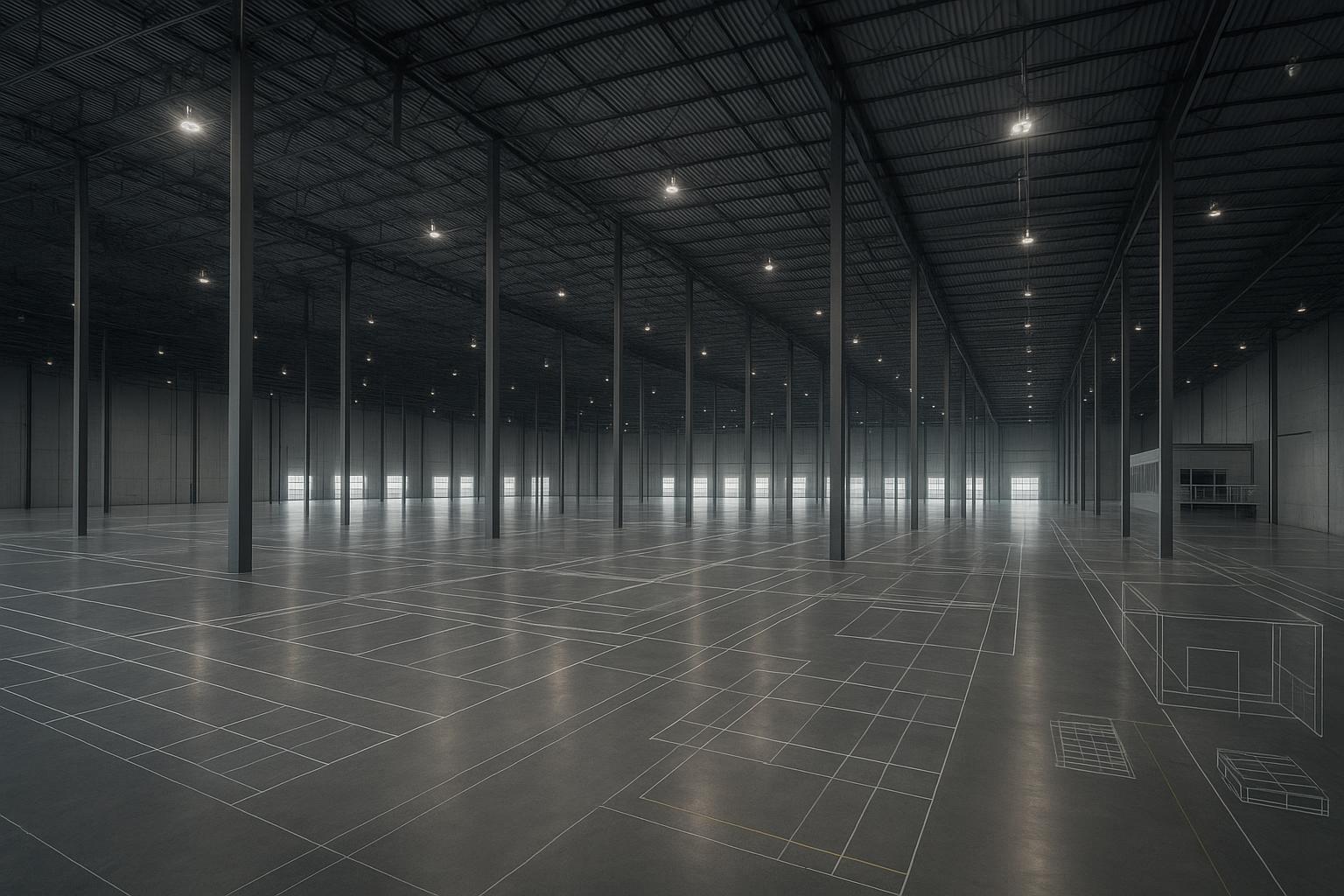
Industrial leasing rarely stalls because the building is “wrong.” It stalls because decision-makers can’t see their operation inside an empty box—fast enough to get to a yes.
When prospects have to imagine racking, equipment paths, office buildouts, and dock flow from bare photos, the deal drifts: more emails, more stakeholders, more “we’ll circle back after ops reviews it.”
Industrial virtual staging fixes that friction by making the space feel usable at a glance. And when you treat it like a repeatable, enterprise workflow—not a one-off marketing task—you shorten the path from listing → tour → proposal.
If you want a workflow that’s built for speed, consistency across angles, and portfolio-scale output, Collov AI is designed to be the system behind it.
(This article uses a hypothetical ROI model to show how the economics can work. Your results depend on market, pricing, and asset specifics.)
Why industrial staging is different
Residential staging is about taste. Industrial staging is about proof.
Your prospects aren’t asking, “Does this look nice?” They’re asking, “Will this building run my operation?” That means your marketing has to communicate scale and flow fast—how racking fits, how equipment moves, where staging supports pick/pack, and whether docks and laydown areas feel workable.
Industrial virtual staging works when it turns an empty shell into an operational story the buyer can validate in seconds. The goal isn’t an engineering manual. It’s immediate, believable clarity.
What industrial virtual staging should show to convey workflow and scale
Think of industrial virtual staging as a fast, visual feasibility study. The aim is to make square footage and clear height “click” for the viewer:
Racking modules and pallets: Depict selective rack with ~48-inch depth and tier counts that make sense for stated clear height and sprinkler clearance. Include a few close views where pallets read clearly for instant scale recognition.
Forklifts and aisle logic: Choose truck classes that match aisle assumptions. Very narrow aisle scenes should visually resolve at ~6–7 feet between racks (with appropriate mast equipment), while counterbalanced scenes should show wider end-of-aisle turn pockets. If you illustrate reach trucks, keep load lengths and turning radii believable against manufacturer norms.
Mezzanines and office pods: Show conceptual pick mezzanines or modular offices where relevant, and label any mezzanine visuals as “conceptual—subject to code/permit review,” since design must comply with IBC, OSHA, and local AHJ requirements.
Docks and exterior flow: In exterior shots, stage dock positions, trailer stalls, and truck court depth that plausibly support the depicted interior flow. Keep trailer volumes aligned with door counts shown.
Multi‑angle consistency: Above all, ensure that racking positions, aisle widths, and office locations are consistent across multiple interior angles, and that exterior dock counts align with the interior logic. Without this, credibility erodes quickly.
The simplified workflow brokers actually want
You don’t need a “photo engineering” process to move an industrial deal forward. You need staged visuals that look consistent, read true-to-space, and show enough operational intent that the next stakeholder stops asking for more context.
The key is reducing broker effort without sacrificing credibility. With Collov AI’s spatial recognition, your team can move faster because the platform can infer depth and scale from the scene—so the broker isn’t manually describing every dimension just to get believable staging.
Here’s the workflow that scales:
Upload the core angles you already capture for marketing (a couple interior views plus the dock/exterior where relevant).
Select the “story” you’re selling (3PL racking density, light manufacturing, flex with office buildout).
Generate multi-angle outputs so racking placement, aisles, and office pods stay consistent across views.
Publish everywhere (listing pages, email blasts, deal rooms, pitch decks) with consistent captions and disclosure.
The practical win: less back-and-forth, fewer “can you show me what this looks like” requests, and faster alignment across leasing, ops, and finance.
Hypothetical case: the software pays for itself the first day you save
Here’s the math brokers and owners actually care about: one more day of vacancy usually costs far more than a month of software.
This is a hypothetical example so you can plug in your own numbers.
Assumptions (illustrative):
Asset: 100,000 square feet.
Vacancy carrying cost: $0.02–$0.05 per sf per day (your OPEX + carrying costs will vary). At $0.03/sf/day, that’s ~$3,000 per day.
Baseline days-on-market: 180 days (replace with your market reality).
Impact from clear, scale-believable industrial virtual staging: 10–30% reduction in days-on-market by reducing confusion, re-explaining, and stakeholder delays.
Sensitivity overview:
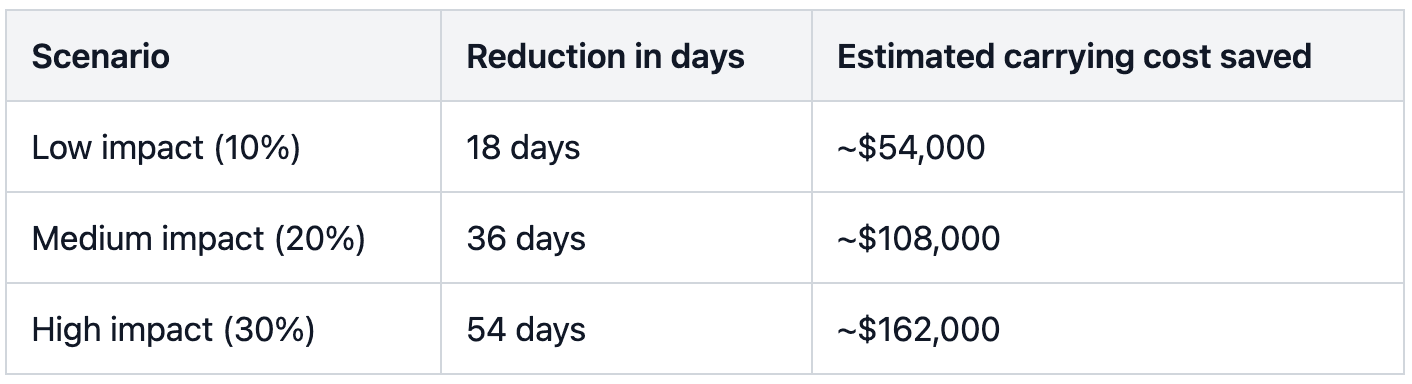
Why this matters for Collov AI: if your vacancy burn is ~$3,000/day, then saving even one day can justify the software spend for many teams—before you count the downstream effects (better-qualified tours, fewer redraw requests, faster internal approvals).
The takeaway isn’t that every asset will hit “high impact.” It’s that the unit economics are asymmetric: vacancy is expensive, and clear visuals are one of the lowest-friction ways to remove delays.
Enterprise rollout with commercial real estate AI tools
For leasing teams working multiple parks and listings, the question is scale—of production, not just visuals.
Bulk processing and SLAs: Establish volume tiers and turnaround standards. Maintain a filename convention that pairs each original with its staged variant and disclosure tag.
Multi‑angle consistency checks: For every interior hero, include a perpendicular or reverse angle to verify racking placement and aisle math. Reject sets that fail consistency.
Distribution and measurement: Publish on listing portals (with clear disclosure), add to VTS deal rooms, and insert into pitch decks. Track listing CTR, inquiry quality, tour‑to‑proposal, and days‑to‑lease for a 60–90 day pilot.
Pilot design: Randomize which listings get industrial virtual staging at launch versus two weeks later; compare velocity and funnel quality. Keep external conditions (pricing, copy, broker effort) as constant as possible.
Practical example: what this looks like in a live deal
You’re marketing a 100,000 sf bay to a 3PL. The first tour goes well, then the real friction starts: ops wants to see racking density, finance wants a fast headcount + office footprint check, and leadership wants a simple “can this work?” answer without another site walk.
Instead of sending more empty photos and writing long explanations, you produce a staged set that answers the operational questions visually:
Two interior angles that show rack runs, pick paths, and office pods at believable scale
A dock/exterior angle that matches the interior story
Multi-angle consistency so the space feels coherent, not like three unrelated renders
This is where Collov AI fits: you can take the same angles you already use for marketing, generate consistent staged outputs, and keep production repeatable across a portfolio. If you’re buying for a team (multiple brokers, multiple parks), see Collov AI pricing for plan details.
Compliance, disclosure, and next steps for leasing industrial parks
Suggested disclosure language for staged images:
“Images include virtual modifications for illustration. Racking, equipment, and mezzanine concepts are not built and are shown at representative scale. All tenant improvements are subject to code, permitting, and landlord approval. Original photos available upon request.”
Also note: mezzanine and certain workflow depictions are conceptual and must be reviewed under the applicable building code and local authority. Maintain originals for comparison and mark staged files in captions and filenames.
If you want to operationalize this (not just try it once), start with a single listing and measure results for 30 days. When you’re ready, start a Collov AI trial and build your first multi-angle staged set from the photos you already have.