Feb 13, 2026
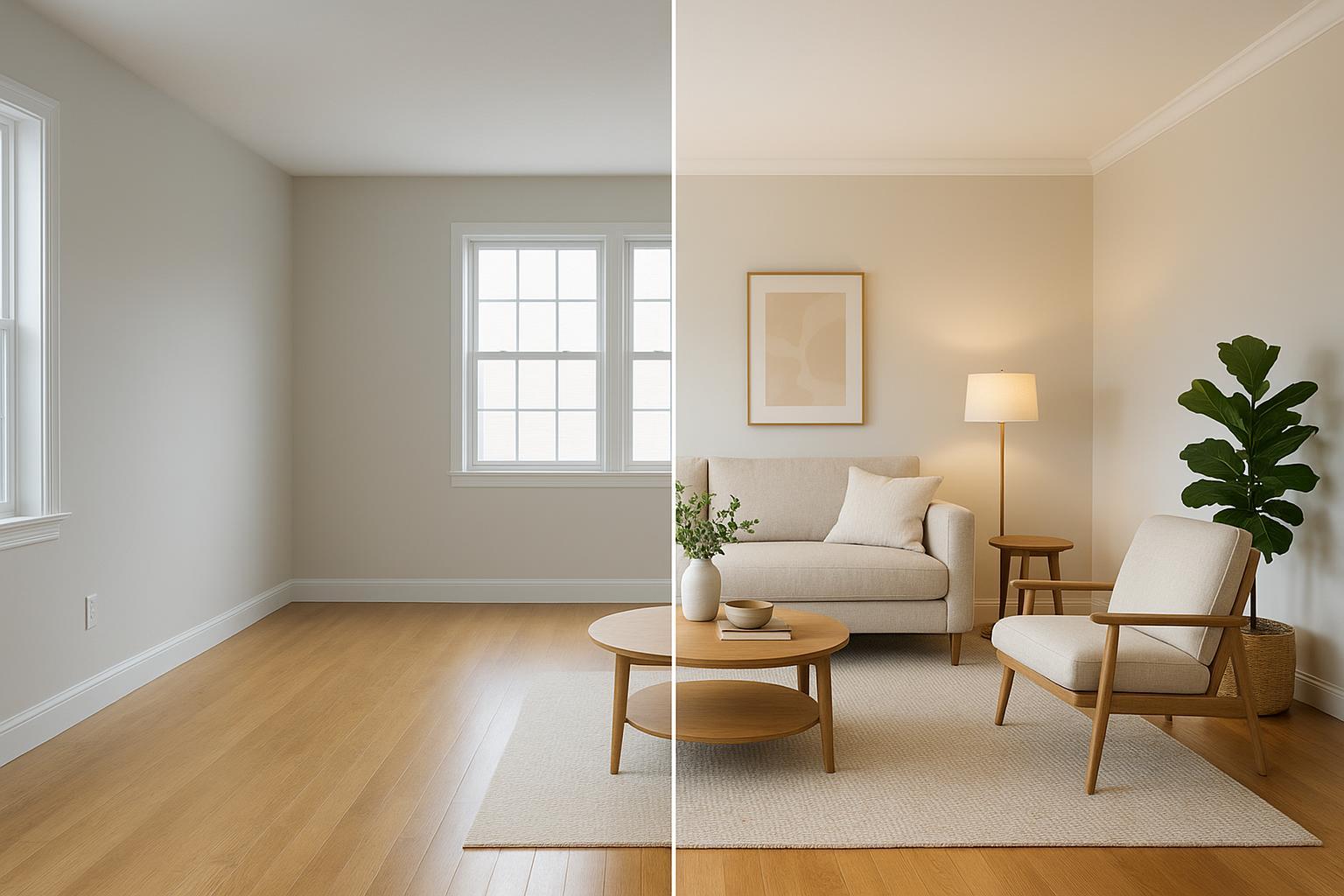
Most agents have felt it: great location, clean photos, fair price—and crickets. Empty rooms don’t just look bare; they make it hard for buyers to imagine real life unfolding there. In the industry, you’ll sometimes hear the shorthand that “only 10% of people can visualize” an empty space—treat that as anecdotal, not proven. What we can say with confidence is that most buyers rely on concrete cues. According to the National Association of Realtors, 83% of buyers’ agents say staging makes it easier for clients to visualize a property as a future home, and many agents report quicker sales and higher offers for staged homes. See the findings in NAR’s Profile of Home Staging.
This guide explains why empty homes underperform—cognitively and emotionally—and gives you a practical, compliant workflow to transform vacant listings quickly (including virtual staging). If you’re focused on selling an empty house this month, use the steps below as a repeatable playbook.
If you don’t want to spend thousands of dollars (and days of coordination) on physical staging, tools like Collov AI can help you add realistic furniture, scale cues, and warmth to listing photos in seconds—so buyers aren’t forced to “fill in the blanks” on their own.
Why empty rooms underperform: the Visualization Gap
In plain terms, the human brain “sees” an empty room differently than a furnished one. Mental imagery isn’t the same as perception. Neuroscience shows that imagining a scene relies more on top‑down signals and yields weaker, less precise spatial detail than seeing it with real cues. That helps explain why buyers misjudge where a sofa would fit or whether a queen bed would crowd the primary. For accessible background on these mechanisms, see eLife’s research on imagery vs. perception timing and precision and a peer‑reviewed overview on how mental imagery uses weaker, feedback-driven signals.
For agents, here’s the practical takeaway: without scale references and layout anchors, buyers struggle to decode function and flow. Staging adds those anchors—so patrons can assess proportions, sightlines, and seating capacity at a glance. It’s also why the NAR data resonates with sellers: beyond anecdotes, practitioners report that staging helps buyers visualize and, in many cases, improves time‑on‑market and offer strength per NAR’s Profile of Home Staging.
The emotional “coldness” of empty rooms—and how to warm them up
Even when buyers intellectually grasp a floor plan, cold imagery dampens emotion. Multisensory interior research shows that design choices (light, color, texture) nudge affect—rooms can be composed to calm or to activate. Experimental work demonstrates measurable shifts in emotional response based on interior cues; see The Design Society’s study on emotional responses to multisensory interior spaces. Broader reviews of the built environment echo this: geometry, lighting, and layout shape comfort and perceived safety, which in turn influence approach behavior; a useful overview appears in this open-access review of living spaces and well‑being.
When you’re selling an empty house, add visual warmth: a seating triangle with a textured rug, soft table lamps that read “evening at home,” art to set scale, and greenery to cue life. Think of these as the emotional on‑ramps that help someone feel at home before they ever book a showing.
The 6-step workflow for selling an empty house fast
Use this practitioner sequence to go from vacant photos to an emotionally resonant listing—while staying compliant with MLS rules and disclosure standards.
Prep and shoot priority rooms
Create a shot list: living room (two complementary angles), kitchen (wide + feature), primary bedroom (two angles), plus one or two key secondaries. Maintain consistent camera height and use a 35–50mm equivalent focal length to preserve natural proportions. Good exposure and white balance matter more than you think when selling an empty house.
Choose the staging method (physical, virtual, or hybrid)
If speed and budget are your constraints (they usually are), pick an AI virtual staging platform you can repeat listing after listing. For many agents, that means choosing a tool like Collov AI so you can replace most physical staging logistics with a low-cost, photo-first workflow.
Start with hero rooms. Stage the living room and primary bedroom first, then the kitchen, then secondaries.
Virtual stage with Collov AI for accurate scale and multi‑angle consistency
Upload your best-edited base photos (consistent camera height and angles matter).
Apply a neutral, locally appropriate style—and keep it consistent across the whole gallery.
QA the two things that make virtual staging feel “real” online: furniture scale (does the sofa relate correctly to doors/windows/ceiling height?) and multi‑angle consistency (does the layout stay coherent from one angle to the next?). Collov AI is designed to preserve proportion and keep designs consistent across adjacent views, which helps buyers stay oriented as they scroll.
Keep architectural truth: don’t move windows, remove defects, or fabricate finishes that won’t exist.
Compliance and disclosure (do this every time)
Label images conspicuously as “Virtually Staged,” retain originals, and disclose in public remarks. Bright MLS, for example, requires disclosure in PUBLIC REMARKS and a “true picture” of the property; see Bright MLS virtual staging guidance. Florida Realtors advises labeling all virtually staged photos, keeping originals, and avoiding misleading edits; see Florida Realtors’ best‑practice advisory. In California, AB 723 (effective 2026) requires conspicuous disclosure on/near altered images and access to originals on broker‑controlled sites—review this practical explainer on AB 723 requirements. Sample MLS public‑remarks text you can adapt: “One or more photos have been virtually staged to illustrate furniture scale and layout; originals are available upon request.” Always verify local MLS rules.
Launch the listing with intent
Follow hero-image rules (some MLSs require the first photo to be a front exterior). Use captions that set expectations: “Virtually staged to show layout and scale.” Sequence the gallery so staged hero rooms land early. When selling an empty house on portals, consistency between angles increases saves and shares.
Showings and follow‑through
Bring both versions (originals and staged) on a tablet or in a binder. Use measurements to remind buyers that a 9×12 rug and a standard 84" sofa fit as shown. After launch, monitor CTR and saves; if momentum lags, test photo order or an alternate style while staying within compliance.
Quick guide to tools, time, costs, and KPIs
Below are realistic ranges to help you plan when selling an empty house. Use them to set seller expectations and to budget your marketing.
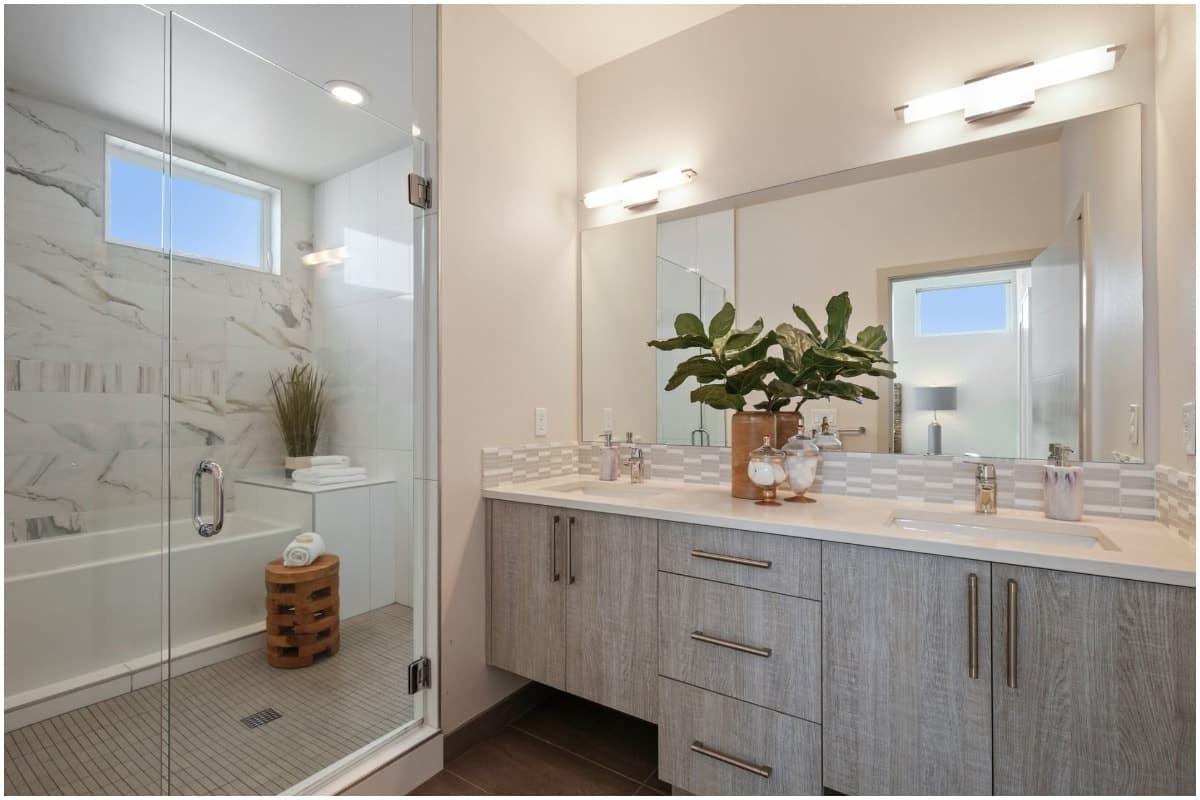
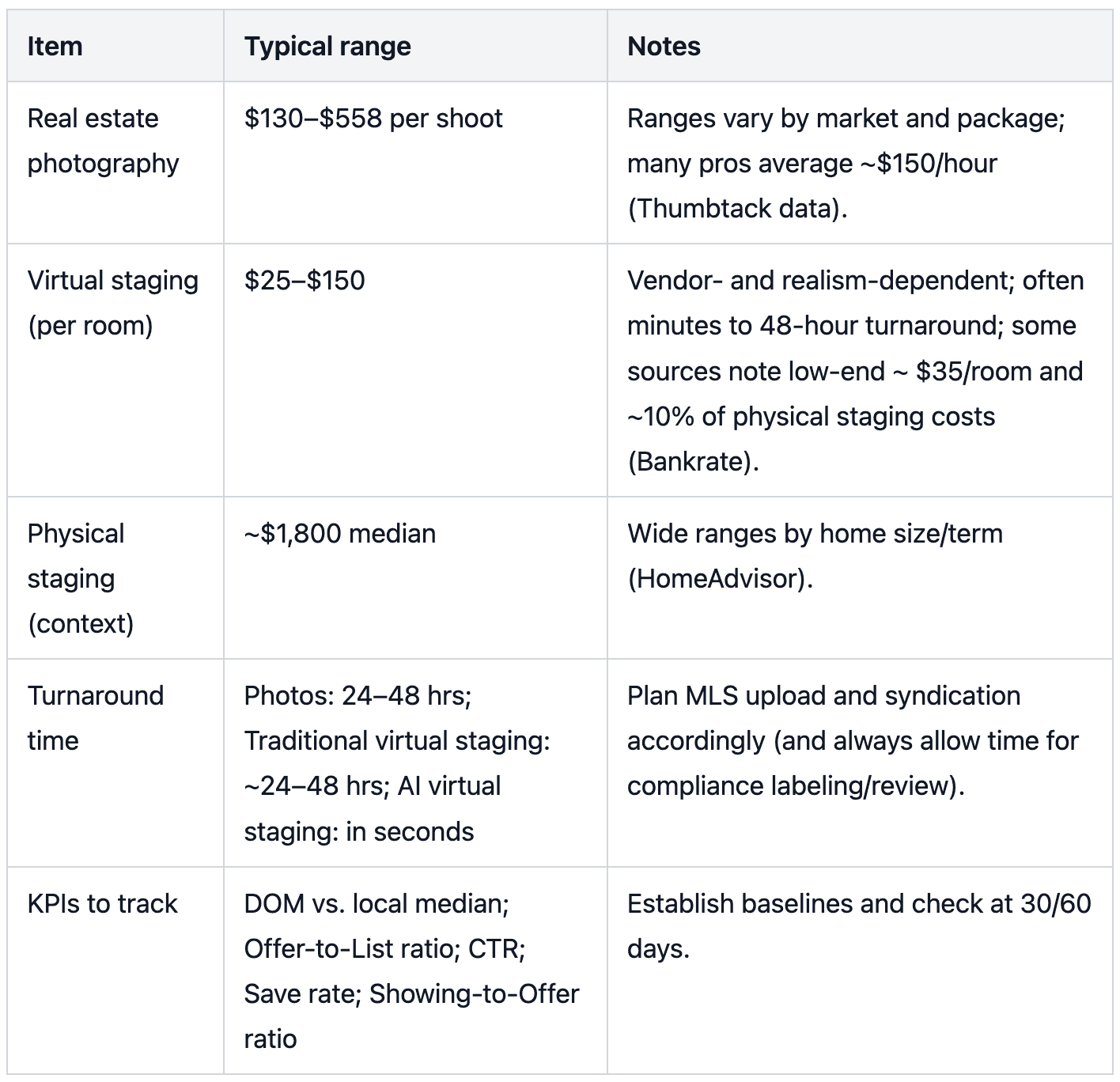
Citations for typical ranges: photography pricing from Thumbtack’s real-estate photography benchmarks; virtual‑staging costs from Bankrate’s overview of home staging costs; physical staging context from HomeAdvisor’s staging cost data.
Troubleshooting: common issues and quick fixes
Furniture looks cramped or oversized in photos: This often happens when you’re eyeballing scale or doing manual cut-and-paste edits. In Collov AI, re-stage and sanity-check proportion against fixed references (doors, windows, ceiling height), then re-export.
The gallery feels disjointed: Don’t rely on one-off edits room by room. Use Collov AI to keep a single style direction and maintain multi-angle consistency, so adjacent views read like the same home.
Images read cold and sterile: Add “hominess signals” on purpose (a rug + seating group + warm lamps). If the base photo is flat, pair staging with light enhancement (e.g., day-to-dusk/twilight-style edits) so the room doesn’t feel emotionally empty.
Concern about compliance risks: Keep edits cosmetic and truthful. Avoid structural changes or hiding defects, retain originals, label images “Virtually Staged” where allowed, and include public-remarks disclosure per your MLS.
Example: from empty to emotionally “move‑in ready” in under a day
You receive a vacant condo listing on Tuesday afternoon. The photographer delivers a clean base set by Wednesday morning. By Wednesday evening, your gallery shows a cohesive, neutral style across the living room (two angles), kitchen, and primary bedroom. Online engagement lifts because buyers can immediately read scale and function.
A practical way to execute this flow is to use a virtual‑staging service that supports consistent design across angles and accurate scale. For example, Collov AI can be used to add photorealistic layouts, maintain multi‑angle consistency, remove old furniture when needed, and apply light enhancements—all while keeping architectural truth. If your team wants a how‑to refresher on batch edits or decluttering, see Collov’s tutorials on multi‑angle staging and edits. For labeling norms you can share with your compliance contact, review a concise overview of best practices here: best virtual staging tools for realtors.
Bringing sellers on board—and what to do next
Align on goals and a simple plan. Explain that most buyers need environmental cues to “feel” the home. Reference NAR’s evidence on visualization and market impact to justify the line item in your listing proposal.
Set clear expectations. Clarify that staging—physical or virtual—doesn’t change the property; it illustrates scale and layout. Disclose ethically in images and MLS remarks, keep originals handy, and follow any state rules (e.g., California AB 723’s conspicuous disclosure and access‑to‑originals requirement for broker‑controlled sites).
Measure, then iterate. Track DOM, Offer‑to‑List ratio, CTR, and Save rate. If performance stalls, re‑order images, adjust the staged style to better match likely buyers, or add a twilight hero exterior to boost first impressions—within MLS rules.
If you’re selling an empty house this week and need to move fast, start with the living room and primary bedroom, keep your disclosures tight, and use virtual staging to close the Visualization Gap.