Mar 28, 2026
Enterprise AI Virtual Staging for Brokerages in 2026
If your brokerage is pushing 100+ listings a month, the problem isn’t “how do we stage a room?”
It’s: how do we ship listing visuals on schedule—every day—without blowing up your budget, brand standards, or compliance posture?
Traditional outsourcing can still work for a handful of hero listings. But at enterprise volume, it often turns into a production bottleneck: queues, handoffs, revision limits, inconsistent styling, and rush fees that quietly become the norm.
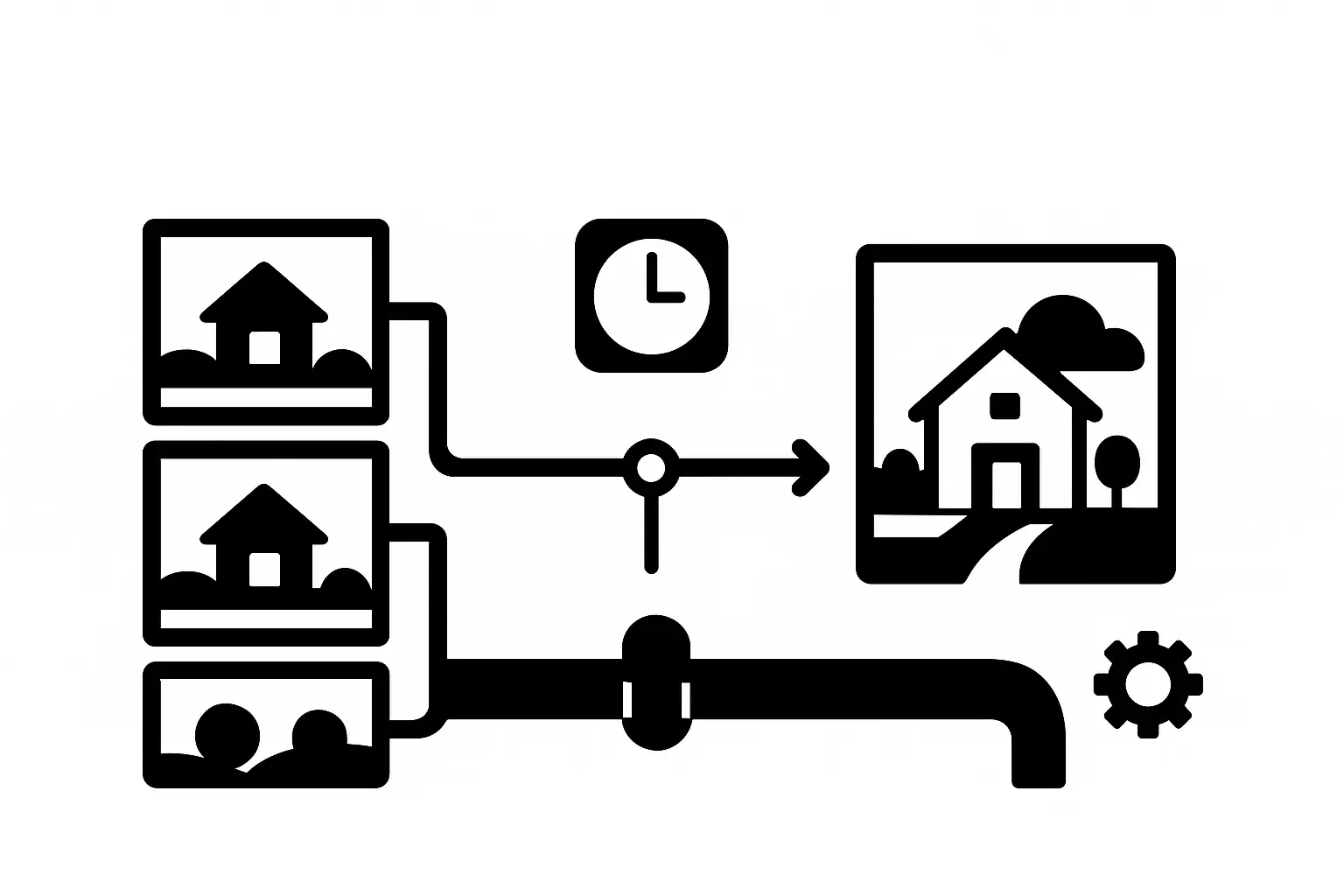
This is where enterprise AI virtual staging stops being a nice-to-have tool—and starts acting like infrastructure. In this post, we’ll walk through how high-volume teams are shifting from a 48-hour staging queue to a 10-minute pipeline using Collov AI. We will focus on the two features that change the math at scale: API integration and batch processing.
Key Takeaway: For large teams, the win isn’t just speed. It’s standardization: predictable turnarounds, consistent visuals, and a workflow that can be governed like any other production system.
How Does In-House AI Staging Compare to Manual Outsourcing Costs?
Below is the operational comparison most high-volume teams actually care about.
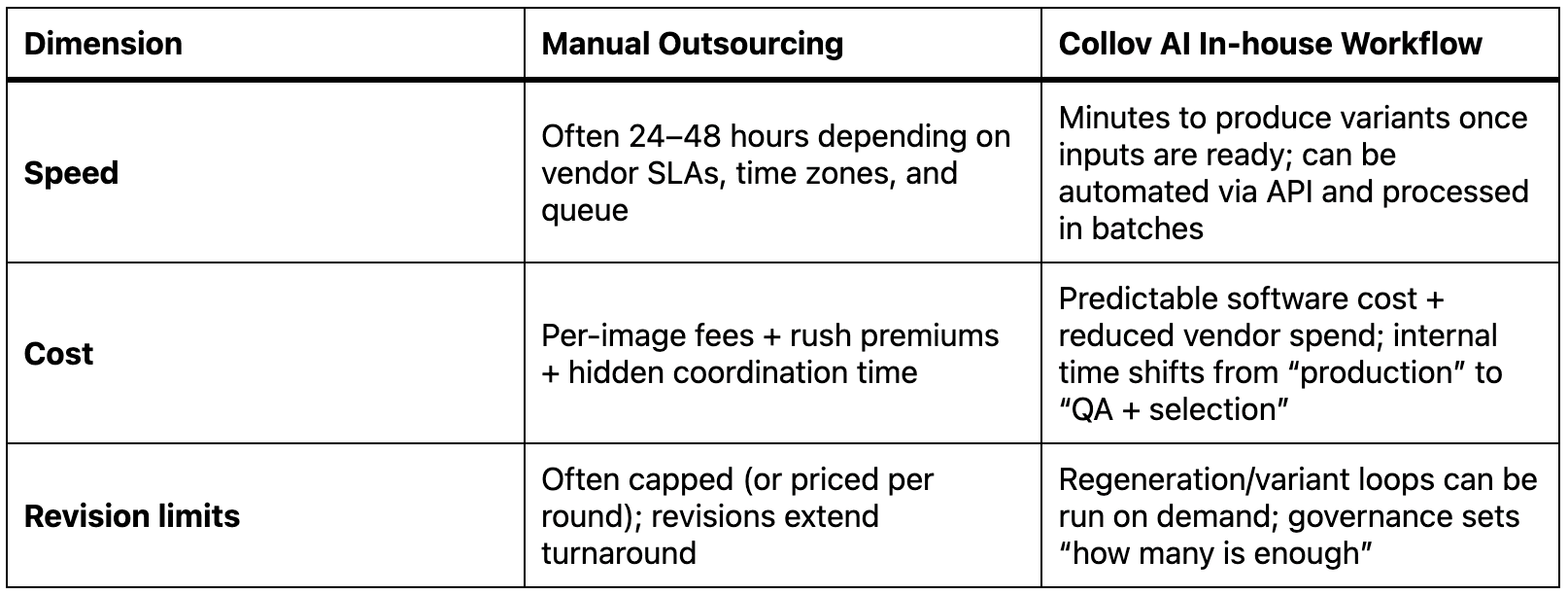
This is why scalable real estate marketing solutions increasingly look less like “hire more designers” and more like “build a repeatable pipeline.”
Why Do 100+ Listings a Month Break Traditional Virtual Staging?
At low volume, outsourcing friction is annoying. At high volume, it becomes systemic.
1) You’re managing a queue, not a service
Every vendor has a throughput limit. When inventory surges (spring season, price reductions, new development releases), the queue backs up. Your listing calendar doesn’t.
2) Revisions are the silent killer
In enterprise workflows, revisions don’t arrive one at a time. They arrive in bursts:
“Swap the style to modern for 12 units.”
“Remove the dining set in every photo.”
“Make the staging more neutral across the entire portfolio.”
If each change requires another vendor ticket and another day, the process becomes self-defeating.
3) Consistency becomes a brand issue
One listing photo set shouldn’t look like it came from three different companies. For enterprise brokerages, staging isn’t just a design decision—it’s a brand standard.
Inconsistent lighting, mismatched furniture scale, or wildly different aesthetics across similar homes can erode trust. It also creates compliance headaches when edits look “too edited”.
4) Operations teams inherit the mess
File naming, version control, approvals, MLS labeling, and asset storage don’t scale through email threads. If you’ve ever had to answer “Which version did we publish?” on a Friday at 6pm, you already know.
Can AI Staging Replace a Full-Time Graphic Designer at a Brokerage?
For enterprise teams, the honest answer is: AI changes the job definition more than it eliminates the job.
A full-time designer in a high-volume brokerage often spends a huge chunk of time on production tasks: creating multiple variants, aligning styles, and re-exporting assets. With a modern AI pipeline, that production work shifts into a systems + QA role.
What AI takes over reliably: High-speed variant generation, repeatable transformations across large batches, and quick “try it both ways” cycles. What humans still own: Brand standards, final quality control, edge cases (unusual architecture), and compliance review.
Your designer becomes the person who defines the guardrails—and ensures the system produces consistent outputs inside them.
What is the Actual ROI of Real-Time Virtual Staging for Large Brokerages?
ROI at scale comes from three places: vendor cost reduction, labor recapture (less coordination), and faster time-to-market.
For example, when [Insert Brokerage Name] transitioned to Collov AI Enterprise for their [Insert Number] monthly listings, the results went beyond basic cost savings.
By eliminating back-and-forth vendor emails and endless revision loops, their marketing ops lead recovered [Insert Hours] hours each week. They reduced their average time-to-market from 48 hours to just under 10 minutes per batch, resulting in a [Insert %] reduction in overall visual marketing costs.
In 2026, real estate team productivity tools aren’t judged only by output quality. They’re judged by whether they reduce cross-team friction.
How Collov AI Enterprise Scales Production: API Integration & Batch Processing
Most staging tools are designed for a user uploading a photo and clicking “generate.” Collov AI Enterprise operates as a production system because it supports API-driven workflows integrated directly into your existing stack.
API Integration: How the Async Pipeline Works
From Collov’s Virtual Staging API docs, the core asynchronous staging flow fits enterprise throughput. Your system submits a task, receives a job ID, and retrieves results when ready.
For teams building scalable marketing solutions, this means you can integrate staging directly into your DAM, listing intake system, or marketing automation pipeline.
Batch Processing: Real-World Application
In enterprise environments, batch processing means your team stages by listing launch date, region, or campaign.
Your system queues jobs, tracks statuses, and writes outputs into a consistent folder structure. You standardize naming and metadata so assets are searchable and audit-friendly. Even with humans in the loop, batching turns staging into a repeatable operating rhythm.
How to Ensure MLS Compliance When Scaling Virtual Staging?
Speed doesn’t excuse misrepresentation. If you’re scaling staging across hundreds of listings, compliance must be embedded into the workflow.
Use disclosure and originals handling as a standard part of the pipeline. As outlined in our 2026 MLS virtual staging compliance rules guide, features like one-click disclaimers (noted on Collov AI’s pricing page) are crucial. However, they only work if your team strictly enforces where and how those disclosures are applied across MLS captions and galleries.
When Does Collov AI Beat Traditional Staging (and When Doesn't It)?
A credible decision-stage evaluation includes tradeoffs.
Strong fit for Collov AI Enterprise:
High-volume portfolios where consistency matters.
Teams with recurring listing templates (same property types, same markets).
Workflows where vendor coordination is already painful.
Not the best first move:
One-off, ultra-luxury listings that require bespoke art direction.
Teams with no agreed visual standards (you need guardrails first).
Traditional staging sells craftsmanship. Enterprise AI staging sells throughput, standardization, and control.
Next Step: Build Your In-House Staging Pipeline with Collov AI Enterprise
If you’re ready to stop treating staging like an external request and start treating it like a governed production system, we can help.
Stop losing days to vendor queues. Book a custom demo at collov.ai/enterprise to see how API integration and batch processing can scale your visual marketing while protecting your bottom line.